



The 2026 Investors Playbook From AI Dominance to Global Opportunities
January 01, 2026
3 min
Hey folks, Kane Buffett here. For a decade on this blog, we’ve chased value, hunted for moats, and tried to separate the next big thing from the next big hype. Today, we’re diving headfirst into one of the most complex and potentially explosive frontiers: quantum computing. It’s a topic shrouded in physics jargon and wild promises, but recent analysis from firms like Jefferies is putting hard numbers on the table—think $198 billion in revenue potential by 2040. But as any seasoned investor knows, a massive long-term TAM (Total Addressable Market) doesn’t guarantee short-term wins. I’ve been sifting through the latest reports and earnings calls, particularly focusing on two pure-play names you’ve probably heard: Rigetti Computing and D-Wave Quantum. Are they hidden gems on the verge of a breakthrough, or are they speculative bets burning cash in a race that’s far from over? Let’s unpack the data, the drama, and the investment case.

📊 Looking for actionable investment advice backed by solid research? Check out The Streaming Wars Heat Up Netflix-Warner AI Merger, Why Amazon is a Buy, and Your Market Playbook for comprehensive market insights and expert analysis.
The Quantum Landscape: A $198 Billion Vision by 2040 Let’s start with the big picture that’s got everyone’s attention. A recent Jefferies report, as covered by Benzinga, laid out a staggering long-term forecast for the quantum computing industry. They project the market could grow to a whopping $198 billion in annual revenue by 2040. This isn’t just about building faster computers; it’s about fundamentally new capabilities. The report breaks down the opportunity into hardware, software, and services, with applications spanning pharmaceuticals (drug discovery and molecular modeling), finance (complex risk analysis and portfolio optimization), logistics, materials science, and artificial intelligence. This projection is a beacon for investors, signaling that quantum computing is transitioning from a purely academic and government-funded endeavor to a commercially viable industry. However, and this is a critical “however,” the path to that $198 billion is not a straight line. It’s a marathon filled with technical hurdles, intense competition from tech giants like IBM, Google, and Microsoft, and a timeline measured in decades, not quarters. The Jefferies analysis serves as both the ultimate bull thesis and a reminder of the immense patience required.
Get the edge in Powerball! Visit Powerball Predictor for live results, AI predictions, and personalized alerts.
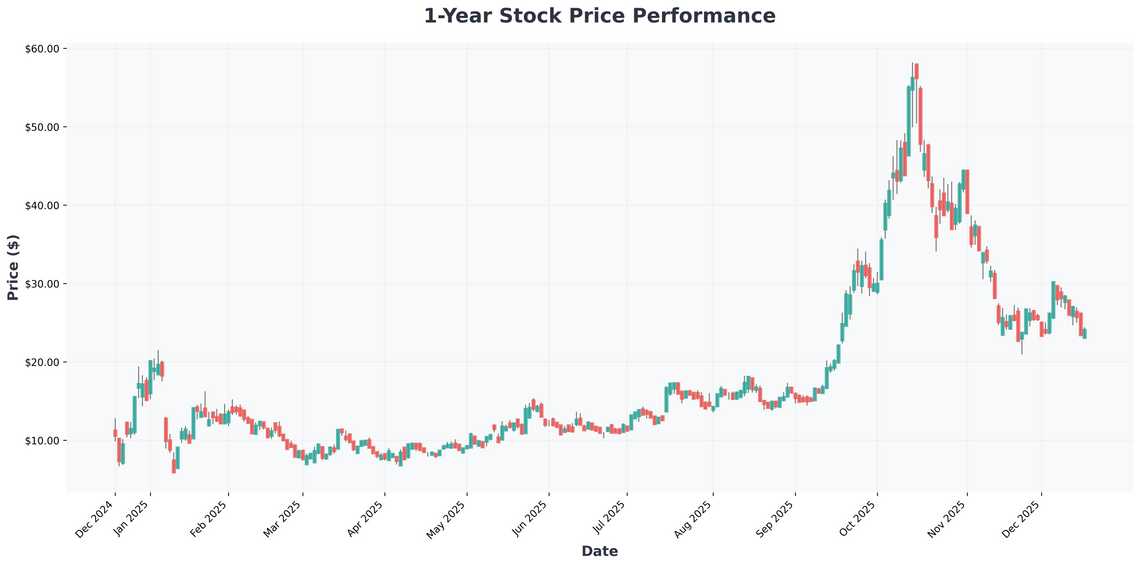
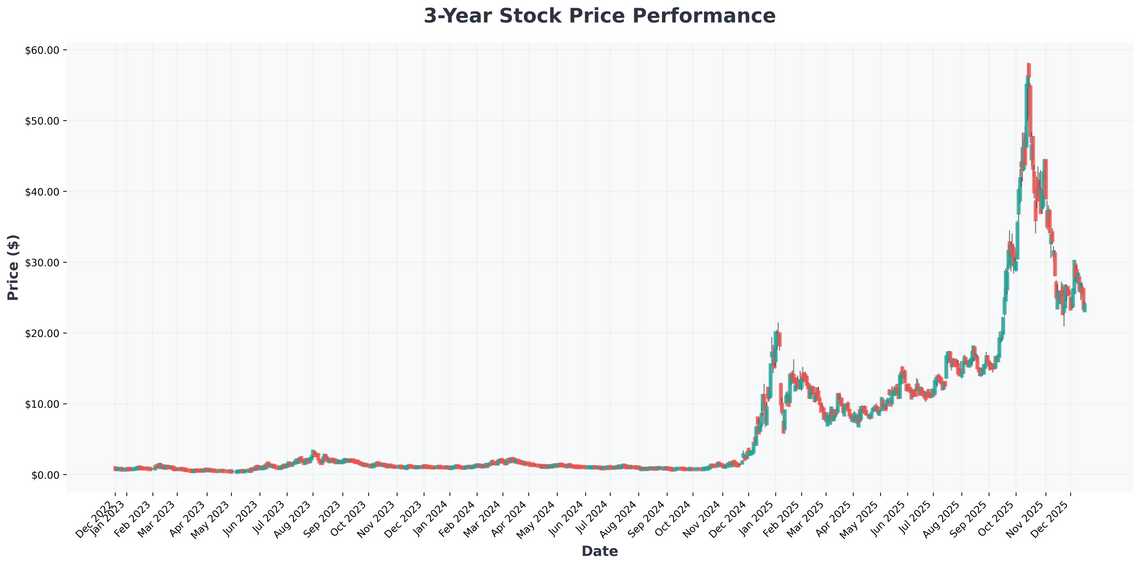
Deep Dive on the Pure-Plays: Rigetti Computing’s Rocky Road Now, let’s zoom in on the companies aiming to capture this future. Rigetti Computing (NASDAQ: RGTI) is often mentioned as a leader in superconducting quantum processors. However, the investment thesis here is fraught with challenges, as highlighted in a recent Fool.com article titled “Don’t Buy Rigetti Stock Until This Happens.” The piece is brutally honest: Rigetti is a “show me” story. The company has consistently missed its own technical milestones and timelines, most notably the delayed development of its next-generation “Ankaa” systems. While they have partnerships and government grants, the core issue is execution risk. The article’s central thesis is clear: investors should wait for tangible, verifiable progress—like the successful deployment and benchmarking of their promised 336-qubit and 1,000-qubit systems—before committing capital. The stock’s volatility reflects this uncertainty. Another Fool article, “Where Will Rigetti Computing Be in 5 Years?”, paints a scenario-based future. In five years, Rigetti could either be a successful niche player with proven hardware, an acquisition target for a larger tech firm, or, in a worst-case scenario, struggling to stay relevant if it continues to fall behind on its roadmap. The takeaway? Rigetti represents a high-risk, high-potential-reward bet entirely dependent on its engineering team delivering on long-promised technology.

Looking for a game to boost concentration and brain activity? Sudoku Journey: Grandpa Crypto is here to help you stay sharp.
The Other Contender: Is D-Wave Quantum Overlooked? On the other side of the quantum arena is D-Wave Quantum (NYSE: QBTS). A Fool article asks, “Is D-Wave Quantum One of the Most Overlooked Tech Stocks?” D-Wave’s strategy is fundamentally different. Instead of pursuing universal gate-model quantum computers (like Rigetti and IBM), D-Wave has spent over two decades perfecting quantum annealing. This approach is specialized for solving optimization problems—think logistics routing, financial modeling, and machine learning feature selection. The bull case for D-Wave hinges on this focus: they offer commercial quantum solutions today via their Leap cloud service, with real, paying customers across various industries. They argue they are closer to delivering practical “quantum advantage” for specific problems. Financially, they also appear to have a stronger balance sheet with more cash runway than some peers. The “overlooked” argument suggests the market may be unfairly discounting D-Wave’s pragmatic, revenue-generating approach in favor of the more glamorous (but unproven) gate-model race. For an investor, D-Wave presents a different kind of proposition: a company with current commercial activity in the quantum space, albeit in a specialized segment that may not represent the entire future of quantum computing.
Make every Powerball draw smarter—check results, get AI number picks, and set reminders with Powerball Predictor.
The Kane Buffett Take: Patience and Perspective So, where does this leave us, the investors? The quantum computing thesis is alive and well, backed by a colossal long-term revenue projection. The opportunity is real. However, investing in the pioneers is not for the faint of heart or the short-term oriented. Here’s my playbook: 1. Treat it as a Venture Capital Allocation: Any investment in pure-plays like RGTI or QBTS should be a very small, speculative portion of your portfolio. Expect volatility and the possibility of a total loss. 2. Prioritize Execution Over Hype: For Rigetti, the message is clear—wait for proof. Watch for milestone achievements, not just press releases. For D-Wave, scrutinize customer growth and real-world problem-solving metrics. 3. Consider the “Picks and Shovels” Approach: Instead of betting on which quantum computer wins, consider the companies providing the essential components, software, or services to the entire industry. 4. The Giants are Playing Too: Don’t forget that your existing holdings in mega-cap tech (GOOGL, MSFT, IBM, AMZN) give you indirect, and often less risky, exposure to quantum R&D. The quantum future is coming, but it’s a distant horizon. Our job is to separate the signal from the noise, manage risk, and position ourselves thoughtfully—not recklessly—for a world that’s still being invented. Stay disciplined, Kane Buffett.
Want to boost your memory and focus? Sudoku Journey offers various modes to keep your mind engaged.
